

Why Does My Espresso Taste Bitter? Common Causes and Simple Fixes
Why Does My Espresso Taste Bitter? Common Causes and Simple Fixes
The quick answer: Bitter espresso is usually a sign that you're extracting too much from the coffee, or extracting it unevenly. A grind that's too fine, a shot that runs too long, too much water through the puck, or water that's too hot can all push an espresso from balanced and sweet toward harsh, dry, and bitter.
The good news? You probably don't need to change everything.
Start with your grind. If the shot is running slowly, make the grind slightly coarser while keeping your dose and espresso yield the same. Pull another shot and taste it. Espresso is much easier to troubleshoot when you change one variable at a time.
If that doesn't fix it, don't just start randomly turning knobs. Brew ratio, temperature, uneven puck preparation, roast level, and even old coffee oils inside your equipment can all play a part.
We'll work through the most likely causes and what to do about them.
First, Is It Actually Bitter?
A little bitterness in espresso is normal. In a balanced shot, it should sit alongside sweetness and acidity, not completely take over.
The tricky part is that people often use "bitter" to describe almost any unpleasant espresso. Before you start changing your grind or recipe, it helps to make sure bitterness is actually what you're tasting.
Bitter espresso tends to linger. Think dark chocolate, burnt caramel, or a heavy, bitter finish that sticks around after you swallow.
Sour espresso is usually brighter and more immediate. It can taste tart, sharp, or even a little like underripe fruit. If that sounds closer to what you're tasting, check out our guide on fixing sour espresso before making any major changes.
Astringency is a little different. Instead of being a flavor, it's more of a dry, rough feeling in your mouth, similar to strong black tea.
Sometimes a shot can taste both sour and bitter. That can be a sign of uneven extraction, which we'll get into in a minute.
Once you're confident bitterness is really the problem, you can start narrowing down the cause.
1. Your Grind Is Too Fine
If your espresso tastes bitter, the grind is one of the first things worth checking.
Grinding finer creates more resistance in the coffee puck. That slows the water down and generally increases extraction. Push it too far and you can end up with a shot that tastes heavy, harsh, or overwhelmingly bitter.
Watch how the espresso is flowing. If it takes unusually long for the first drops to appear, the shot crawls out of the portafilter, and the finished espresso tastes bitter, your grind may simply be too fine.
Try moving your grinder slightly coarser and pull another shot without changing anything else.
That last part matters. Keep your dose and espresso yield the same so you can actually tell what the grind adjustment did.
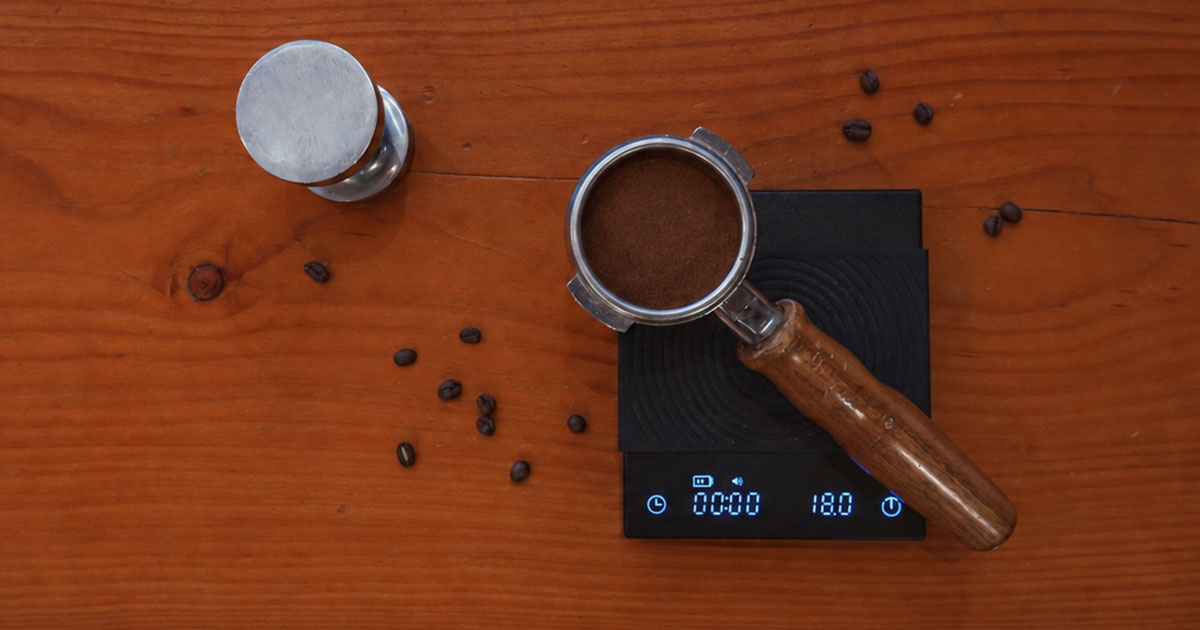
For example, if you're using 18 grams of coffee and aiming for 36 grams of espresso, keep those numbers the same. Only change the grind.
You don't need to make a huge adjustment. Small changes to the grinder can make a surprisingly big difference in the cup.
And don't worry about hitting one "perfect" shot time. A 30-second shot isn't automatically good, and a 35-second shot isn't automatically bad. Taste should always be part of the decision.
2. You're Pulling Too Much Espresso
If your grind looks reasonable but the espresso is still too bitter, take a look at how much you're actually pulling from the coffee.
This is where brew ratio comes in. Brew ratio is simply the relationship between the amount of ground coffee you use and the amount of espresso you end up with in the cup.
A common starting point is a 1:2 ratio. So if you're using 18 grams of coffee, you might aim for around 36 grams of espresso, as mentioned earlier.
If you keep letting the shot run well beyond that, you're continuing to extract from the coffee. Depending on the coffee, the shot can start picking up more bitterness and dryness while losing some of the sweetness and balance you were looking for.
The fix is simple. Stop the shot a little earlier.
For example, if you're using 18 grams of coffee and your shot tastes bitter at 45 grams out, try stopping closer to 36 or 38 grams and taste it again.
Keep the grind and dose the same for now. Just change the final espresso yield.
And remember, 1:2 isn't a rule. It's a useful starting point. Some coffees taste better shorter, and some taste better longer. What matters is finding the point where the espresso tastes balanced and enjoyable to you.
3. Your Brew Temperature May Be Too High
Hotter water generally extracts more from coffee. That can be useful with some coffees, but if the water is too hot for the coffee you're using, it can push the shot toward harsher, roastier, or more bitter flavors.
This is especially worth watching with darker roasted coffees, which often don't need as much heat as lighter roasts.
If your machine lets you adjust brew temperature, try lowering it a couple of degrees and pull another shot. Keep your grind, dose, and espresso yield the same so you're only testing the temperature change.
For example, if you're brewing at 202°F, try 199°F or 200°F and see what happens in the cup.
There isn't one perfect espresso temperature for every coffee. You're looking for the temperature that brings that particular coffee into balance.
4. Your Shot May Be Extracting Unevenly
Sometimes the problem isn't that the whole shot is over-extracted. Different parts of the coffee puck may be extracting at different rates.
This is called channeling. Water naturally looks for the easiest path through the coffee. If the puck has cracks, clumps, or uneven areas, more water can rush through some spots than others.
That's when things can get confusing. One part of the puck may contribute bitter, over-extracted flavors while another gives you sour, under-extracted flavors. The shot can end up tasting bitter, sour, dry, or a little of everything at once.
If you're using a bottomless portafilter, spraying or obviously uneven flow can be a clue. You might also notice the espresso coming through much faster on one side of the basket than the other.
Don't get too caught up in how the puck looks after the shot, though. What happens during extraction, and more importantly what you taste in the cup, tells you a lot more.
Keep your puck prep simple and consistent. Distribute the grounds evenly in the basket, break up any obvious clumps, and make sure you're tamping level. If you already use a WDT tool, this is where it can be helpful.
Then pull another shot without changing the rest of your recipe.
If your espresso tastes both bitter and sour, don't automatically reach for the grinder. Uneven extraction may be the real problem, and grinding coarser could send you in the wrong direction.
5. The Coffee Itself May Lean Bitter
Sometimes the espresso is telling you exactly what the coffee tastes like.
Darker roasted coffees tend to have more pronounced roast-driven flavors. In espresso, those can come across as bittersweet, smoky, roasty, or even a little charred depending on the coffee and how it was roasted.
That isn't necessarily a bad thing. Plenty of people prefer a deeper, more traditional espresso with flavors like dark chocolate, caramel, and toasted nuts. The question is whether that's the kind of espresso you're trying to make.
If you're using a darker roast, a slightly lower brew temperature or shorter yield may help bring out more sweetness and keep those heavier flavors in balance.
But dialing in can only take you so far. It can bring out the best in a coffee, but it can't completely change the character of the coffee you started with.
6. Your Espresso Equipment May Need Cleaning
Espresso leaves behind more than spent coffee grounds. Oils from the coffee can build up on your basket, portafilter, shower screen, and other parts of the machine. Over time, those oils can turn stale and add harsh, smoky, or generally unpleasant flavors to the cup.
If your espresso used to taste good and has slowly gotten worse without any major change to your recipe, give the equipment a good cleaning before you start chasing grind settings.
Pay particular attention to the basket, portafilter, and group area. If your machine is designed for backflushing, follow the manufacturer's recommended cleaning routine.
Your grinder deserves a look too. Old grounds can collect in the chute and around the dosing area, eventually finding their way into a fresh dose and muddying the flavor.
A clean machine won't fix a bad recipe, but it makes troubleshooting a whole lot easier.
Worth ruling out the simpler explanation first. A bag a few weeks older than it was will grind and flow differently on the same setting. Here's how coffee changes after the roast date.
A Good Starting Espresso Recipe
If you've made a few adjustments and feel like you're starting to chase your tail, it can help to reset with a simple baseline.
Try this:
- 18 grams of coffee
- 36 grams of espresso
- About 25 to 35 seconds
- Around 198 to 200°F, if your machine lets you control brew temperature
This is a 1:2 brew ratio, and it's a solid starting point for a lot of coffees. It isn't a perfect recipe, and it isn't where every espresso should end up.
Think of it as a place to start tasting from.
The shot time is there as a reference, not a target you have to hit. A great espresso can fall outside that range. For example, for a lighter roast you might want your shot to pull a little longer, or for dark a little shorter.
Once you have a baseline, make small adjustments from there and pay attention to what actually changes in the cup. That process has an order to it. Here's our five-shot method for dialing in a new bag, start to finish.
Know When to Stop Adjusting
There comes a point where another grinder adjustment probably isn't going to solve the problem.
If you've worked through the basics and every adjustment makes the shot different but none of them make it better, you may simply be looking for something that coffee isn't going to give you.
That's okay. Espresso preferences are personal. Some people love deep, roasty flavors. Others want more sweetness, fruit, caramel, or brightness.
If you're looking for a smoother espresso with plenty of body but less harsh bitterness, the flavor notes on the bag can point you in the right direction. Coffees with notes like caramel, chocolate, nuts, and fruit sweetness can be a good place to start.
Our Discovery Espresso was built around that kind of balance, with dark caramel, toasted almond, subtle fruit sweetness, and a silky, full body. It works well as a straight shot while still having enough depth to stand up to milk.
Sometimes the best adjustment isn't another turn of the grinder. It's starting with a coffee that's closer to the espresso you actually want to drink.
Trust Your Taste
Bitter espresso can be frustrating, but getting it dialed in usually doesn't require changing everything at once.
Make a change, pull another shot, and taste what happened. If it gets better, you're moving in the right direction. If it gets worse, that's useful information too.
Don't get too hung up on hitting a perfect shot time, brew ratio, or temperature just because someone else says that's what espresso is supposed to be. Those numbers are helpful starting points, not the final judge.
Espresso gets a lot easier once you stop trying to make every number perfect and start paying attention to what's happening in the cup.
The goal isn't a technically perfect shot. It's an espresso you actually want to drink.
keep reading

Get our latest brewing guide videos


and the stories behind the coffee
in your inbox

Get our latest brewing guide videos and the stories behind the coffee in your inbox

Get free coffee by earning points in the Cutters Point app. Download it here:


Website built by RUSTY GEORGE